
Podcast: The Festival of Britain in Poplar
In the summer 2026 The People Speak embarked on an oral history project that’s very close to our heart. We were asked to create a podcast that captures the spirit of 75th Anniversary celebrations of the Festival of Britain, especially focusing on our neighbourhood of Poplar.
1951 The Festival of Britain – ‘tonic for the nation’
Six years after the end of the Second World War, and exactly one hundred years since the famous Great Exhibition of 1851 – the first international exhibition of manufactured products – the Festival of Britain was a display of might and fortitude on a national scale, showcasing the best of British manufacturing and design.
The Festival of Britain was intended as a ‘tonic for the nation’, a spectacular cultural event to raise the spirits of a country still in the grasp of austerity and rationing, and undergoing severe social and economic reform [Source the V&A Museum]
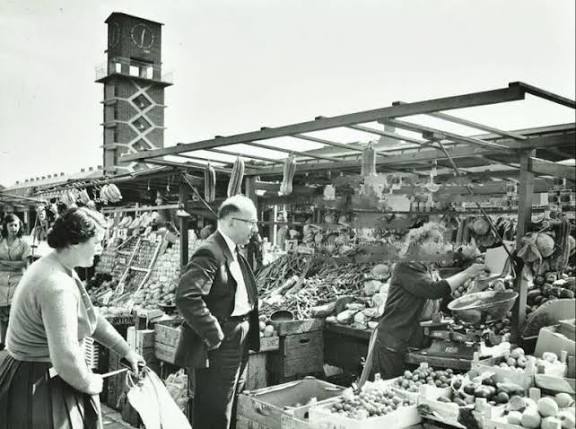 Photo by Len McLondon on Facebook
The Festival of Britain was a national exhibition and fair held throughout the United Kingdom in the summer of 1951. Funded chiefly by the government at a cost of £12 million, it was intended to give the British public a sense of recovery and progress after the devastation of the Second World War, and to promote British science, technology, industrial design, architecture and the arts. It proved immensely popular, with more than ten million paid admissions to its six main exhibitions, and helped reshape British arts, crafts and design for a generation.
There was an exhibition about building research, town planning and architecture, the “Live architecture” exhibit of buildings, open spaces and streets at the newly created Lansbury Estate, Poplar (named after the former Labour Party leader George Lansbury). Plans for social housing in the area had commenced in 1943. By the end of the war nearly a quarter of the buildings in this part of East London had been destroyed or badly damaged. In 1948, the Architecture Council decided that the Poplar site would make a good exhibition partly because it was near to the other Festival exhibitions.
[Source Wikipedia]
Re-discovering Poplar
We have been based in Poplar coming on 11 years but we didn’t really know that Chrisp Street Market and the Lansbury Estate were created as part of the Live Architecture exhibition at The Festival of Britain. We were asked to make a podcast to celebrate the 75th Anniversary so we did what we do best – we spoke to a lot of people – and ended up making 5 episodes. It was fascinating to hear how experiences and perceptions of the East End had changed over that time, how the buildings were built and how regeneration has continually reshaped the area.
“The most striking story for me – says Mikey – is of some schoolgirls playing in a bomb site and being delighted to find beautiful coloured pharmaceutical bottles scattered across the ruins, told to us by 92 year old Margaret. It is an image of hope within the rubble”
And that is the spirit in which Poplar was reconstructed. Compare that with now and the vibrant, bustling, multicultural place Poplar has become.
 Photo of a live-action living room living exhibition at Poplar Union; Photo credit Ana Mae Contreras-Ramirez
 “I guess traditionally, in terms of British culture, despite there being so many ethnicities and cultures and people like migrating since forever, their stories have been largely suppressed and marginalised or forgotten about. But I think we see that tide turning today where people of our generation, even older generations, they’ve begun to think, why don’t I see my heritage, my identity represented?” – Mara Ahmad; Photo credit Brown History Substack

Past and Future of the East End
During the summer we came along to a number of events, workshops and walking tours around Poplar including Chrisp Street Market & Lansbury Estate, Bartlett Park & Poplar Union, Teviot Estate… – all part of the 75th Anniversary celebrations. Having interviewed many attendees and organisers alike we had a tough job of editing hours of amazing conversations, which together form an engaging podcast series. In he process we noticed strong themes coming through, which we arranged in 5 Episodes:
Episode 1: “Homes for Heroes – History of the Festival of Britain”
Episode 2: “The Rise of Social Housing”
Episode 3: “Not a Single Way to Live – Modernism and Society”
Episode 4: “Thriving in East London – Work and Culture in the East End”
Episode 5: “Keeping History Alive – Legacy of the Festival of Britain”
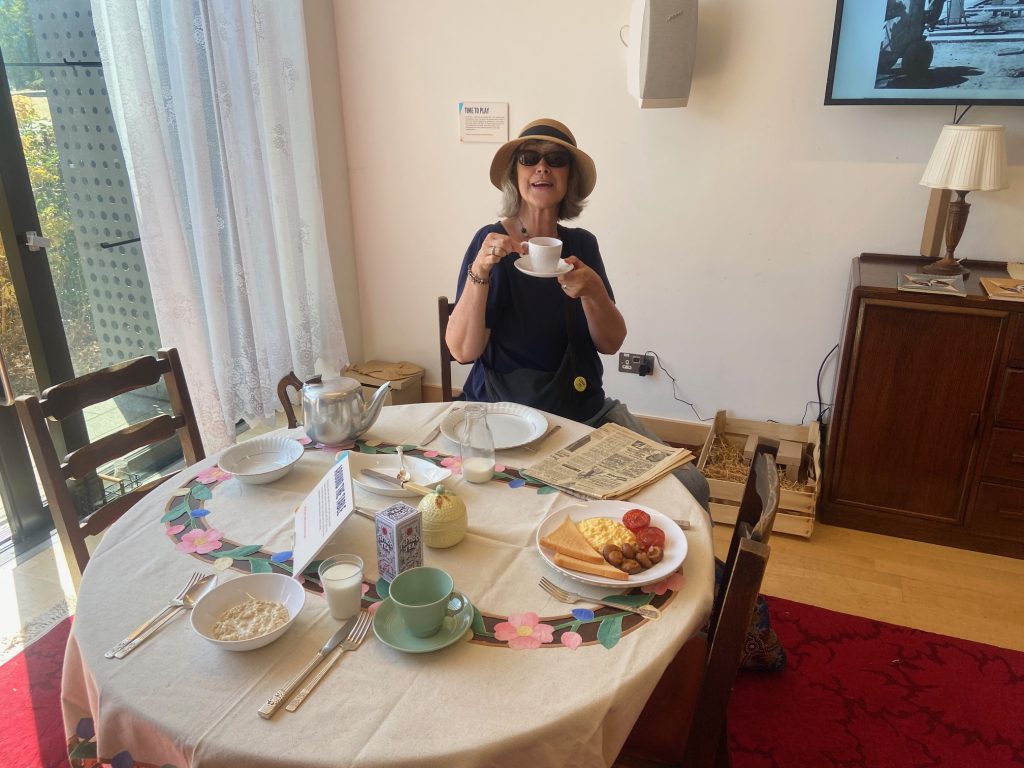 “My mum does say that, whenever anyone’s house got bombed, neighbours would come rushing to help, cup of tea first, to get over the shock, loads of sugar. And then try to salvage anything that they could from the house. People would just bring other people in their house” – Kim McGee

 “There’s definitely a spirit of that in the Festival of Britain, which I find really heartening and heartwarming. And I think it’s because they’re not selling a single vision of life.
When you look at so many visions of Britain, there’s an attempt to reduce us all down into one type of person, one sort of life that we should be aspiring to” – John Grindrod

Our podcast aimed to shed light on social and historical context of post-war Britain all the way through to the modern day. We wanted to capture voices of real people and their families who’ve lived in Poplar through the 50s, 60s and 80s, including Jean Poynter, Doreen Martin, Kim McGee and John Per.
We were also interested in research into local and social history of the East End by the local historians such as Chris Weavers and published writers Owen Hatherly and John Grindrod.
Housing experts were able to share their perspective on how some of ideals of the 50s evolved and materialised as new approaches to social housing and resident involvement today, including perspectives from the Poplar HARCA staff as well as independent advisors Mike Tyrell and Julie E.
And finally, we loved hearing about creative interpretation of history in archive-inspired work of local artist Annette Fernando, innovative collaborations between artists and school children of Lansbury Lawrence School or a live-action living room living exhibition curated by Danielle Patten, as well as architectural design styles like modernism and its legacy through the eyes of Delvendahl Martin Architects.
Whether you’re native to the East End or have recently moved to the area, we hope the podcast will provide you with interesting insights and encourage you to explore Poplar and its rich history.
Listen to all 5 Episodes of the Festival of Britain Podcast on our You Tube and Spotify.
Thank you to all of the contributors: Ana Mae Contreras-Ramirez, Annette Fernando, Blossom Young, Carron, Chris Weavers, Dave Tull, Doreen Martin, Faiza Guthus, German Nieva, Jannette Walsh aka Lady Jan, Jean Poynter, John Grindrod, John Per, Julie E, Kerri Sellens, Khizra Ahmed, Kim McGee, Mara Ahmed, Margaret Keep, Mike Tyrell, Nikolai Delvendahl, Nurull Islam, Owen Hatherley, Pat Williams, Paul Dooley, Phillip Bennett-Richards, Pierre Bureau, Salena Miah, Steve Stride, Yasmin Lennon-Chong.
The People Team: Margot and Mikey (producers, podcast hosts and interviewers), Evi Hall (interviewer), Clementine March (editor).

 “No matter your age, if you have an elder, if you have somebody of a certain age, talk to them, use that magical thing, that phone, that iPhone, record them, annoy them, because once they’re gone, so’s the history” – Carron; Photo credit Ana Mae Contreras-Ramirez

Our project was made possible thanks to funding from the National Lottery Heritage Fund.
Leave a Reply
Sign up for our mailing list.
Follow & Watch Us:


